It is safe to assume that for the majority of retail businesses, 2020 has offered some unique challenges. Lockdowns resulting from the COVID-19 pandemic have affected parts of the retail industry differently, with some owners having to close temporarily and some thriving in the new environment.
The social partners have agreed to extend short-time work. Phase III of short-time work can be applied for from October 1st.
In an information letter (GZ 2020-0.457.789 dated 20.07.2020), the Federal Ministry of Finance (BMF) answered further detailed questions on the temporary introduction of the reduced VAT rate of 5% from 1 July 2020 in the restaurant, hotel, cultural and publication sectors.
The Austrian Social Partners have agreed to extend short-time working. As of October 1, 2020, phase 3 of short-time working can be applied for, currently for another 6 months until March 31, 2021. According to the Austrian Social Partners, an extension beyond this for another six months from April 1, 2021 will become necessary and is being planned due to the particular impact on certain sectors.
The retail industry is currently in a period of disruption unique in its scale and severity. The global outbreak of COVID-19 has impacted parts of the industry in different ways. While businesses in the grocery sector grapple with supply chain issues, those selling consumer goods and apparel have been challenged by store closures and rapid growth of online sales
The aviation industry has been significantly impacted by the disruption and travel restrictions resulting from the COVID-19 pandemic. With a huge portion of the global fleet of passenger aircraft sitting idle and airlines, lessors, airports and support businesses facing a drop in revenues, we look at the steps businesses can take to survive and adapt.
The hotel industry is dealing with an unprecedented crisis due to the disruption caused by the global COVID-19 pandemic. With hotels shut or operating at severely reduced capacity and with customers in lockdown, we look at the steps businesses can take to not only survive but also put themselves in the best position for reopening.
In order to support the areas of gastronomy, culture and publications, which are particularly affected by COVID-19, an initiative motion on the temporary introduction of a reduced VAT rate of 5% was submitted to the National Council on 18 June 2020. The National Council is expected to pass a resolution on this on 30 June 2020 and the Federal Council on 2 July 2020. We have compiled some information on this subject. (Status: 24.06.2020)
Vienna’s position on the doorstep of Central and Eastern Europe (CEE) make it the ideal location for international businesses to take advantage of new trading opportunities opening up between the western and eastern Europe.
The health crisis brought by the COVID-19 virus has suddenly paralyzed many sectors of the economies in CEE. The impact will be long-lasting. In these times, our clients need support and guidance across their business, however the immediate priority is to manage short to mid-term cash and liquidity needs. The adage that cash is king needs to be communicated not only to the finance departments but also across all business units.
Across the globe, the spread of the coronavirus is having a significant humanitarian impact and increasingly, an economic impact from stock markets to global supply chains. As governments move rapidly to contain the spread of the virus, global employers are also working to address how to manage employees in affected areas while continuing business operations. The daily developments in the spread of the virus have prompted the U.S. Center for Disease Control to note that the need to contain its advance could cause serious disruptions in work for employees. For multinational companies with global operations, the increased potential for employees to relocate across international borders, whether as part of business continuity strategies or for personal reasons, presents a range of unexpected tax issues to also address. By reviewing how governments are responding relating to individual tax compliance, employers can understand and address the tax risk areas they should consider as they formulate policies for working arrangements during the coming months.

Measures taken in connection with the rapid spread of the corona virus have completely changed the daily operations of most companies. In addition to the introduction of short-time work, many companies have enabled their employees to work from their home office in order to minimize the risk of infection of their employees. Since the nearest national border in Austria is often not far away, enabling employees to work from their home offices in foreign countries can quickly lead unintended tax consequences for both employees and their employer. Below, we would like to point out selected aspects in connection with the corona measures.
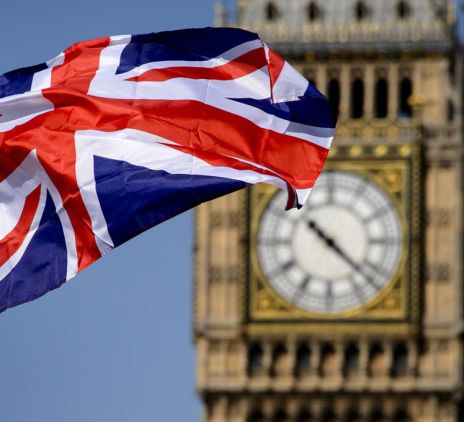
Wow! 3 years and 7 months after the EU Referendum in which 51,9% of voters ticked “Leave”, we only have a very short time left to go until the UK leaves the EU! With amazingly little fanfare or drama, the UK will quietly and legally exit the world’s largest trading bloc after 45 years as one of its most significant members. With the departure of the UK and its 16% budget contribution *(source Financial Times), the economy of the EU is set to become smaller than that of the US. Reading the British media over the past few weeks, it seems as if “Meghxit or Harrxit” seem to be more in the public interest than Brexit as a another fiercely independent member leaves a stable instituion that is argubaly in need of modernization.
In the transition phase lasting until the end of 2020 everything will essentially remain as before except that the UK will have no voting rights will have legally left the European Union. However, the trade agreements that govern the period after withdrawal must be made quickly. Both chambers of the British Parliament have approved the Brexit Act and the Queen has given Royal Assent. This means that the withdrawal agreement is now a done-deal on the UK side. The next step is for the European Parliament to approve the withdrawal agreement on 29 January. Only two days later, on 31 January at 24:00 (CET), Great Britain will leave the EU. More than three and a half years after the British had voted for withdrawal in a referendum, the Brexit is finally being executed.
New research from the Grant Thornton International Business Report (IBR) reveals that while business confidence in 2014 climbed to levels not seen since before the financial crisis, a recent spate of uncertainty is weighing on growth prospects for the year ahead.