The imposed entry bans to contain the Corona pandemic have turned the work organization of many businesses upside down from one day to the next. Since the outbreak of the pandemic, work could no longer be performed on site in many industries. Some companies therefore (forced) to switch to home offices.
We would like to thank all our business partners and employees for their trust and successful cooperation in this extraordinary year 2020. We wish you and your family a Merry Christmas, relaxing holidays and a Happy New Year!
We are pleased to inform you that Grant Thornton Austria is moving to our new office location at Vienna Hauptbahnhof. Despite the majority of our people working remotely due to the current restrictions and regulations, we look forward to serving you from our new location going forward.
The German Government has agreed on a business activity support programme, which consists of 57 measures and contains a volume of EUR 130 billion. The agreement stipulates, that the VAT rates shall be reduced from 19 % to 16% respectively from 7% to 5 %. The reduced VAT rates shall be applied between July 1, 2020 and December 31, 2020.
Measures taken in connection with the rapid spread of the corona virus have completely changed the daily operations of most companies. In addition to the introduction of short-time work, many companies have enabled their employees to work from their home office in order to minimize the risk of infection of their employees. Since the nearest national border in Austria is often not far away, enabling employees to work from their home offices in foreign countries can quickly lead unintended tax consequences for both employees and their employer. Below, we would like to point out selected aspects in connection with the corona measures.
Considering both the situation at home and abroad, it is our absolute responsibility to reduce any risk of infection and to minimize the consequences for our employees and clients. From Monday onwards, most of our employees will work from home. We have taken the following measures to ensure that you, our valued customers, continue to receive your services on a complete and timely manner.
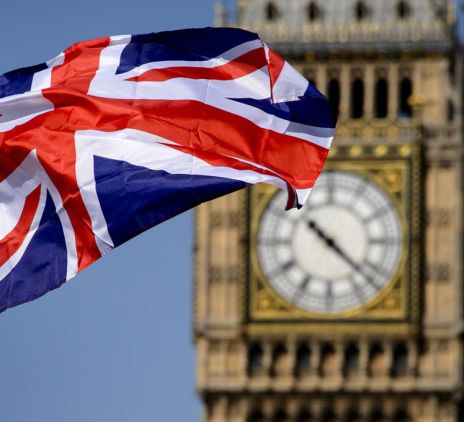
Wow! 3 years and 7 months after the EU Referendum in which 51,9% of voters ticked “Leave”, we only have a very short time left to go until the UK leaves the EU! With amazingly little fanfare or drama, the UK will quietly and legally exit the world’s largest trading bloc after 45 years as one of its most significant members. With the departure of the UK and its 16% budget contribution *(source Financial Times), the economy of the EU is set to become smaller than that of the US. Reading the British media over the past few weeks, it seems as if “Meghxit or Harrxit” seem to be more in the public interest than Brexit as a another fiercely independent member leaves a stable instituion that is argubaly in need of modernization.
In the transition phase lasting until the end of 2020 everything will essentially remain as before except that the UK will have no voting rights will have legally left the European Union. However, the trade agreements that govern the period after withdrawal must be made quickly. Both chambers of the British Parliament have approved the Brexit Act and the Queen has given Royal Assent. This means that the withdrawal agreement is now a done-deal on the UK side. The next step is for the European Parliament to approve the withdrawal agreement on 29 January. Only two days later, on 31 January at 24:00 (CET), Great Britain will leave the EU. More than three and a half years after the British had voted for withdrawal in a referendum, the Brexit is finally being executed.
Expanding into new international markets can be challenging due to the many issues to consider and resolve. Our team provides advice and insights to support you on every step of your way.
IFRS 16 requires lessees and lessors to provide information about leasing activities within their financial statements. The Standard explains how this information should be presented on the face of the statements and what disclosures are required. In this article we identify the requirements and provide a series of examples illustrating one possible way the note disclosures might be presented.
Der fehlende internationale Konsens über die Besteuerung der digitalen Wirtschaft schafft ein Vakuum der Unsicherheit. Also, was kommt auf den Horizont und wie kann Ihr Unternehmen mit den Auswirkungen umgehen?
The lack of international consensus on taxing the digital economy is creating a vacuum of uncertainty. So, what’s coming up on the horizon and how can your business deal with the implications?
International taxation is undergoing the biggest shake-up for a Generation.
F&B companies are using international expansion to chase profits globally.
Global tax newsletter is designed to keep you up to date with significant tax developments around the world that impact businesses with cross-border operations. It addresses issues of a global nature as well as domestic tax developments of interest to foreign investors. The newsletter aims to cover tax developments on a regional and international basis.