COVID-19 continues to challenge the business landscape like no other event before it and many in the mid-market are now fully-focused on building greater resilience into their operations. However, true resilience goes beyond short-term survival – it means achieving a velocity that returns your business to a growth trajectory.

Key considerations to respond changing stakeholder demands
I spend a lot of time outside of work with friends and colleagues; going out, playing or watching sport, going to the cinema. But do I spend as much quality time as I should with my family? If you ask my Mum, she will say no.
When it comes to charities and the not for profit sector, social media has often outpaced organisational change. Social media has huge potential to deliver services, foster internal values and sharing, and achieve strategic goals beyond communications.
You may well have seen the news last week that the European Parliament approved a package of accounting reforms relating to the relationship between Public Interest Entities (PIE) and their auditors operating within the European Union.
The economy of France continues to suffer as the eurozone crisis continues. Following a deep contraction in 2009, the economy recovered robustly, posting seven consecutive quarters of expansion. However, France has stagnated over the past two years as problems in southern Europe intensified, with growth slowing as unemployment and government debt rise.
Thinking outside the Big Blue box. Scott Barnes responds to UK Competition Commission proposals.
A lot has been written about auditor rotation over recent months, but in August, India became the latest major economy to actually enforce mandatory rotation. This is big news. And not just for us accountants.
I was interviewed on Wednesday morning by Bloomberg and BBC World, discussing our latest IBR results which reveal that the vast majority of business leaders would welcome more guidance on tax planning, even if this reduced their opportunities to cut cross-border tax liabilities.
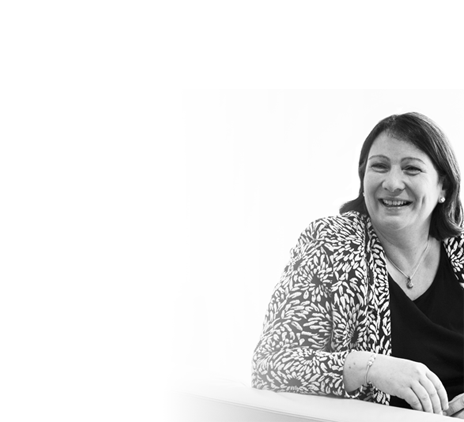
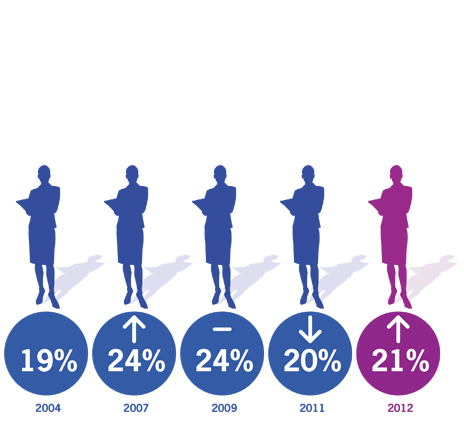
There was much cause for optimism in our annual look at women in business through the International Business Report (IBR). The survey reveals that the proportion of women in senior management roles has climbed to 24% (up from 21% in 2012), back up to levels seen before the financial crisis.
The past 12 months have seen women take the lead in some of the toughest economic and political environments, and they also head governments in countries such as Argentina, Australia, Brazil and Thailand.