The International Sustainability Standards Board (ISSB) has now issued its first two international sustainability standards (the Standards) that become effective for periods beginning on or after 1 January 2024. Together they mark the start of a new era of requiring reporting entities to make sustainability related disclosures.

The 1st GT.European Football Cup 2023 will be remembered by us and all participants for a long time: In addition to the sporting performance, the focus was on team spirit and networking.
The Austrian Federal Ministry of Finance has updated the income tax guidelines regarding the taxation of foreign employers without a permanent establishment, which changes last year’s amendment and aligns it to the legal situation before January 2020. A permanent establishment for payroll purposes is defined as any fixed local facility or establishment maintained by the employer in the country for a period of more than one month, if it serves to carry out the activity performed by the employee.
The health crisis brought by the COVID-19 virus has suddenly paralyzed many sectors of the economies in CEE. The impact will be long-lasting. In these times, our clients need support and guidance across their business, however the immediate priority is to manage short to mid-term cash and liquidity needs. The adage that cash is king needs to be communicated not only to the finance departments but also across all business units.
Due to a change in the Austrian VAT Code the following two requirements must be additionally met in order to apply the zero VAT rate to intra-Community supplies of goods:
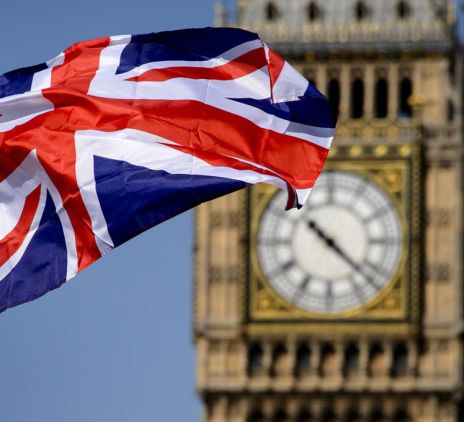
Wow! 3 years and 7 months after the EU Referendum in which 51,9% of voters ticked “Leave”, we only have a very short time left to go until the UK leaves the EU! With amazingly little fanfare or drama, the UK will quietly and legally exit the world’s largest trading bloc after 45 years as one of its most significant members. With the departure of the UK and its 16% budget contribution *(source Financial Times), the economy of the EU is set to become smaller than that of the US. Reading the British media over the past few weeks, it seems as if “Meghxit or Harrxit” seem to be more in the public interest than Brexit as a another fiercely independent member leaves a stable instituion that is argubaly in need of modernization.
In the transition phase lasting until the end of 2020 everything will essentially remain as before except that the UK will have no voting rights will have legally left the European Union. However, the trade agreements that govern the period after withdrawal must be made quickly. Both chambers of the British Parliament have approved the Brexit Act and the Queen has given Royal Assent. This means that the withdrawal agreement is now a done-deal on the UK side. The next step is for the European Parliament to approve the withdrawal agreement on 29 January. Only two days later, on 31 January at 24:00 (CET), Great Britain will leave the EU. More than three and a half years after the British had voted for withdrawal in a referendum, the Brexit is finally being executed.
A Conservative Government has been returned to Westminster. What are the tax implications?
From 2020, employers who do not have a permanent establishment (PE) for taxes on salary in Austria will also be obliged to pay wage tax on their employees if their employees are subject to unlimited taxation. In particular, employees with domestic residence or habitual abode are affected.
In the case of a posting, workers pursue their activity in another Member State on a temporary basis. If employees are posted abroad on business by their employer, insurance contributions abroad may be payable in addition to social security contributions in Austria. In order to prevent this, posted employees need the so-called A1 form as proof of posting. They can use it to document which social insurance system is responsible for them in an EU/EEA country.
On 12 June 2019, the Hungarian Parliament approved a bill that will see the social contribution tax and the simplified contribution to public revenues decrease from 19.5% to 17.5% from 1 July 2019. For companies with internationally mobile employees, the reduction in social tax cost is a welcome move that reduces overall assignment cost to the business and further limits tax cost for employees.
Key considerations to respond changing stakeholder demands
Profitably growing a Food and Beverage company today is more difficult than ever – yet opportunities have never been greater.
Technology is at the cutting edge of efforts to make growth more sustainable. As the global population swells and more people move into higher consumption classes, the demand for food, for energy, for water, will all increase. But the resources our planet offers will not. Clearly the status quo is not sustainable.