Businesses of all shapes and sizes are trying to carve out a competitive advantage by leveraging digital information. The most cutting-edge companies harness customer preference data for a range of reasons, including to create personalised services and targeted marketing campaigns; to scrutinise employee performance data to drive productivity; and to analyse supply chain information to drive efficiencies. And that’s just the tip of the iceberg, with digitised data embedded across business practices.
Expanding into new international markets can be challenging due to the many issues to consider and resolve. Our team provides advice and insights to support you on every step of your way.
IFRS 16 requires lessees and lessors to provide information about leasing activities within their financial statements. The Standard explains how this information should be presented on the face of the statements and what disclosures are required. In this article we identify the requirements and provide a series of examples illustrating one possible way the note disclosures might be presented.
Jutting out into Austria’s skyline, emerging from the surrounding forest, lies an ancient medieval wonder – Hochosterwitz Castle. The thousands of tourists that flock here every year soon learn a surprising fact: it is one of only a very small number of castles around the world that has never been breached.
Real estate and construction is probably not the first sector that comes to mind when you think about environmental sustainability. The construction process consumes large amounts of natural resources and energy, and can create significant waste. While the progress of development continues to add to our quality of life, the built environment is responsible for approximately two-fifths of global energy use and a third of carbon emissions. This means that, from design to demolition, the buildings in which we live, work and play have a huge impact on the environment.
Businesses in the world’s three biggest economies, the United States, China and Japan, are increasingly feeling the heat when it comes to recruiting skilled staff. Given that these countries together represent over a third of global output, a deficit of skilled staff could have a significant knock-on effect on economic growth not just in these economies but beyond.
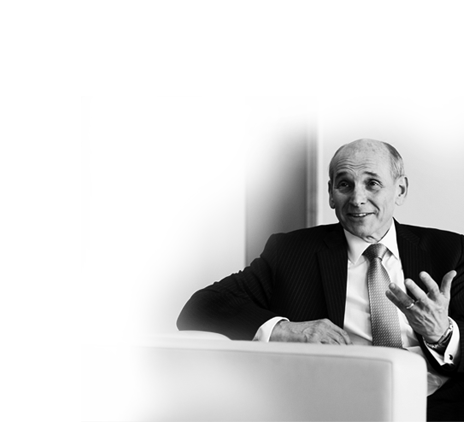
Ed Nusbaum, global CEO of Grant Thornton, discusses the Q3 global economic outlook and finds the slowdown in Germany threatening eurozone and world growth prospects.
Recession, economic uncertainty, and market volatility have forced many miners out of the industry and brought others to the point of insolvency.
Over the last few years, ask an economist where to look for growth and the answer would usually be the emerging markets. Now, though, with renewed optimism in Japan the UK, and US , should we be looking to the developed economies for new opportunities?
Outsourcing remains widely utilized by businesses across both sides of the Atlantic. The UK is seeing increasing utilization of outsourcing services across a number of industries, including the IT, HR, tax, and finance and accounting (F&A) functions within companies. And a recent survey shows that this continues to be attractive to companies within the USA, UK and EU.
The Chinese economy is slowing. The days of rampant, double-digit expansion are in the past as we move away from massive investment and export dependency towards a more sustainable, consumption-driven model of growth. This rebalancing offers both challenges and opportunities for dynamic organisations. How these businesses adapt to the changing environment will be key to their growth prospects.